
Comfort & Lifestyle
Bringing Back Family Dinner
The Challenge
The Homeowner Challenge
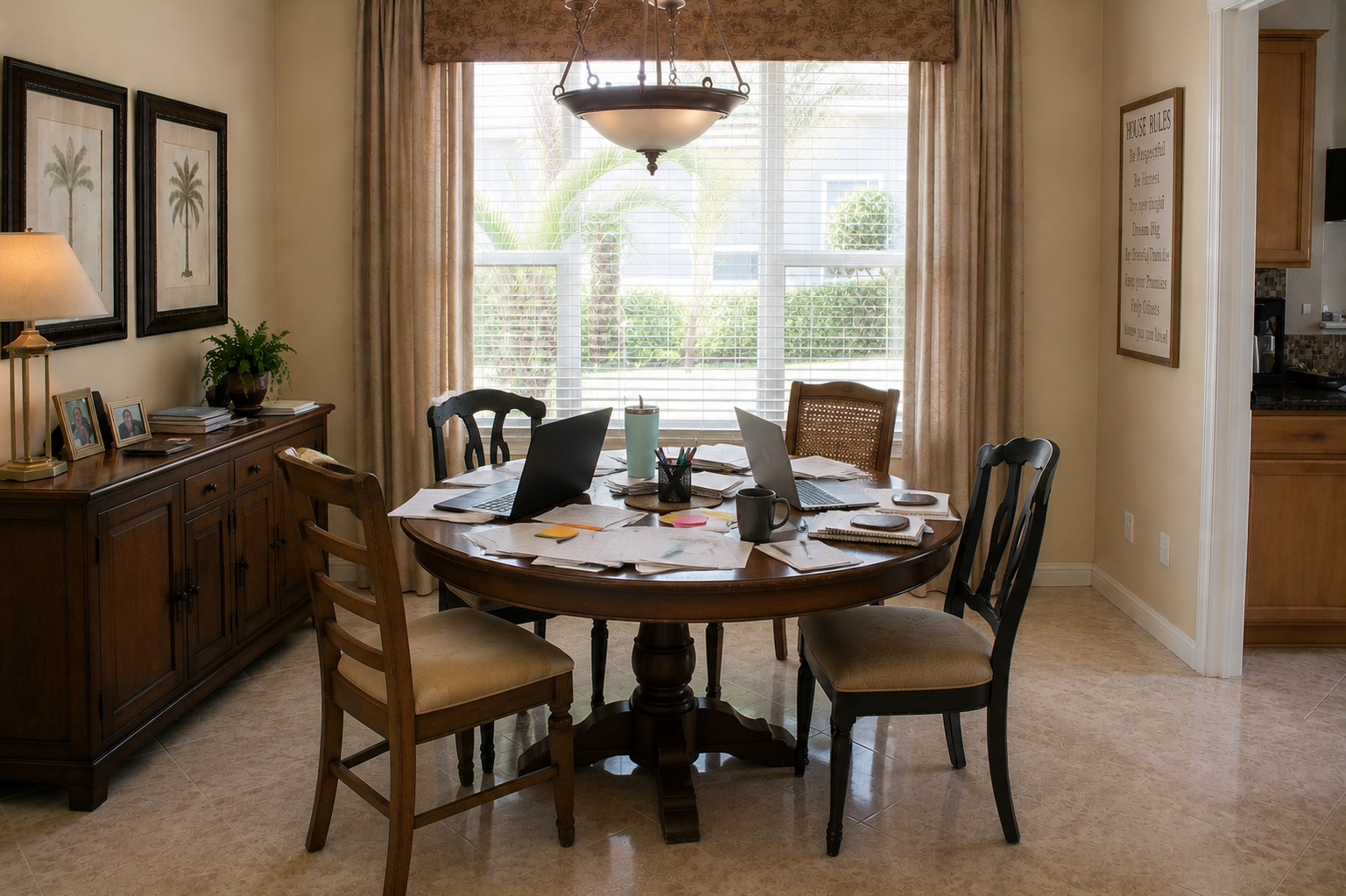
Over the years, this couple’s dining room gradually stopped functioning as a dining room.
Like many busy households, the table became a place for mail, paperwork, laptops, shopping bags, and miscellaneous household items. While the room looked presentable, it was rarely used for meals or meaningful family time.
The homeowners realized they missed something they once took for granted—sitting down together, slowing down, and enjoying regular meals without distractions.
They wanted the room to become part of their daily lives again rather than a space reserved for occasional holidays and special events.
The Approach
Maria’s Approach
Instead of focusing on furniture first, we focused on how the homeowners wanted to feel when using the space.
The goal was to create an environment that encouraged gathering, conversation, and everyday use.
We evaluated room flow, seating comfort, scale, and functionality while selecting pieces that felt welcoming rather than formal.
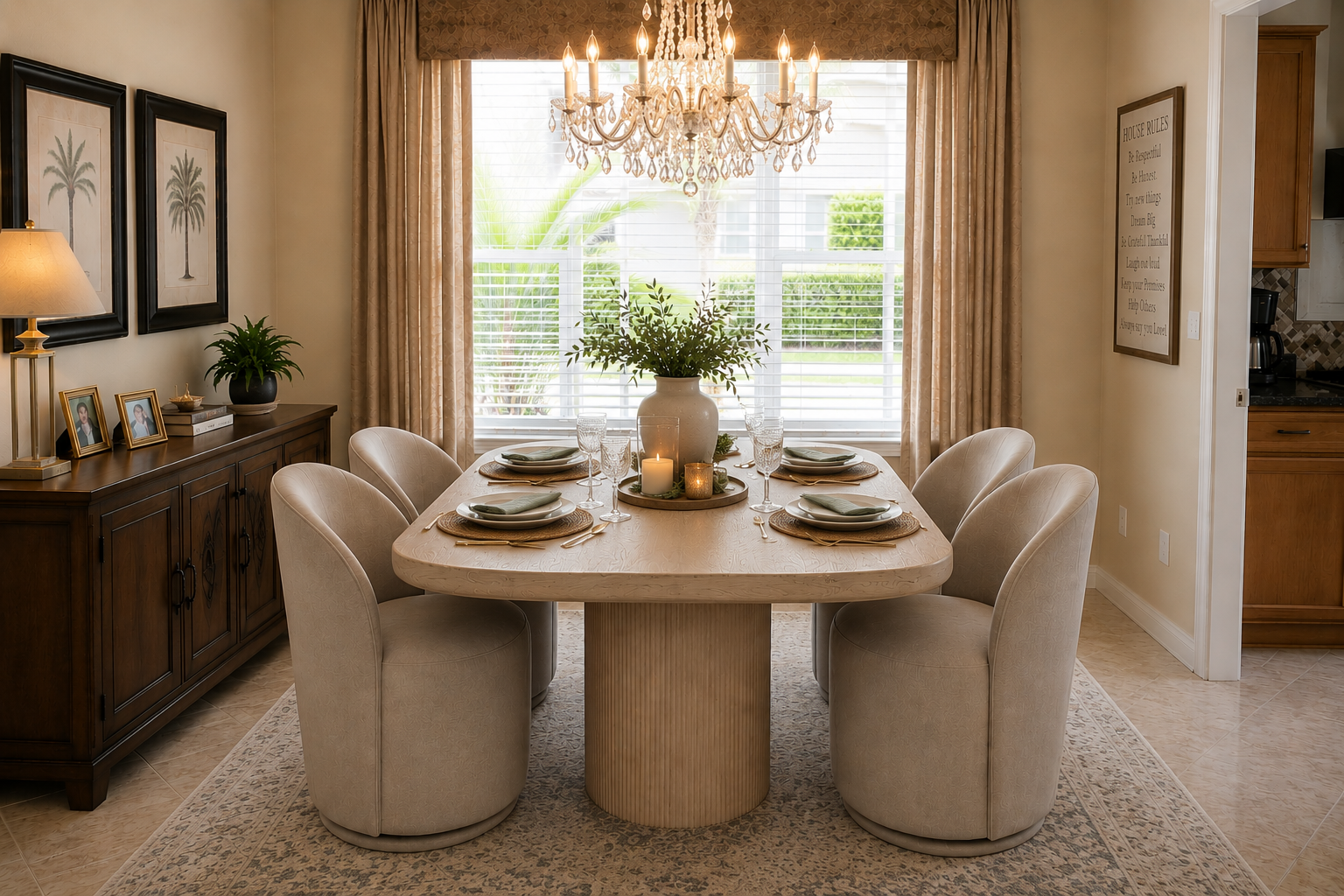
The dining room was redesigned to support real life instead of special occasions.
Smart Decisions Made
• Replaced an oversized dining arrangement with a more appropriately scaled solution
• Improved traffic flow around the room
• Chose comfortable seating designed for longer conversations
• Created a layout that encouraged everyday use
• Reduced visual clutter and distractions
• Designed the space around behavior rather than appearance
Maria’s Insight
Many homeowners unknowingly design rooms around occasional events rather than daily living.
A room doesn’t become important because of how it looks.
It becomes important because of how often it helps people connect, gather, and create memories.
Sometimes the smartest home decision is creating a space that supports the life you want more of.
The Result
The Outcome
The dining room became one of the most actively used spaces in the home.
The homeowners found themselves enjoying meals together more frequently, hosting friends more often, and spending less time eating in separate rooms.
Benefits included:
• More family meals
• Better daily connection
• Increased use of the dining room
• Improved room functionality
• Reduced household clutter
• Greater enjoyment of the home
The room evolved from a rarely used formal space into a meaningful part of everyday life.
Homeowner Feedback
““Many salespeople were eager to tell us what to buy. Maria was the first person who wanted to understand how we lived before making recommendations. She asked thoughtful questions about our lifestyle, how we used our home, and what we hoped to change. The furniture was important, but the real transformation was creating a space that brought us back together around the table.””